Gambler's Fallacy: Why Do Players Believe It?
The gambler's fallacy is a cognitive wiring defect, not a harmless quirk, and it gets exploited every single second inside casino floors and RNG-driven platforms worldwide. Players genuinely believe that a red streak on a roulette wheel makes black "due," and that belief is the exact pressure point the house leans on to keep the ledger tilted. 🎰
Strip away the psychology and you find a brutal mechanical truth: independent events have zero memory. A slot reel, a shuffled deck, a certified random number generator — none of them track your losses. The gambler's fallacy hijacks the human brain's pattern-recognition hardware and points it at a system that was mathematically designed to have no patterns at all.
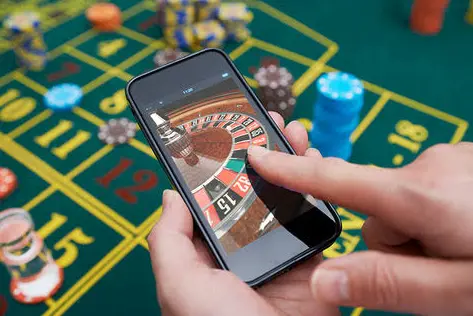
The Streak Illusion and Neural Pattern Hunting
Human survival wiring evolved to detect sequences — a rustle in the grass meant a predator, not coincidence. That same firmware fires when a player sees six banker wins in a row on a baccarat shoe and screams that player is overdue. This is the hot hand and cold hand illusion bleeding into negative-expectation betting, and it is ruthlessly reliable. 🧠
From a hardware audit perspective, this is where it gets ugly. Streak displays, bead plates, and history boards on live dealer tables are not neutral information services — they are psychological amplifiers. The house knows a visible streak compresses the player's time-to-decision and inflates bet sizing on the "corrective" wager that never corrects anything.
Run the numbers and the fallacy collapses instantly. On a fair coin flip, the probability of tails after five heads is still exactly 50 percent — the coin does not owe you a correction. In roulette, a red-heavy sequence does not shift the next spin's black probability by a single decimal point. The law of large numbers describes long-run convergence, not a debt the universe pays out on your schedule.
Why the Fallacy Survives Contact With Reality
Here is the part that infuriates mathematicians: the fallacy survives because the human memory system is a selective liar. Players vividly encode the times the "due" number hit and quietly discard the dozens of spins where it never arrived. That survivorship bias in personal recall is enough to keep the belief engine running for decades.

Operators and platform engineers understand this asymmetry at a granular level. Variable-ratio reinforcement schedules — the same mechanic that powers slot volatility profiles — produce the strongest resistance to extinction of any conditioning pattern ever measured. Combine that with a false causal model like the gambler's fallacy and you get a player who cannot be talked out of a losing system by data alone. 😤
The countermeasure is not motivation or discipline, it is mechanical literacy. Any player who genuinely internalizes that each spin, deal, and roll is an isolated probability event removes the fallacy at the root. Until that happens, the streak board stays lit, the "due" bet keeps getting placed, and the house edge grinds on with absolute indifference.
The House Math Behind the Belief
Every belief in a correcting universe is worth money to someone. A player chasing a due outcome increases wager frequency, raises average stake size under emotional load, and abandons any pre-committed stop-loss within minutes. That behavioral signature is measurable, predictable, and priced directly into floor layout, game pacing, and promotional timing.
Demand-side audits of real session data consistently show the same curve: loss-chasing clusters spike precisely after visible losing streaks, which is the gambler's fallacy executing in real time. The RNG did not change. The payout table did not change. Only the player's mental model of independence broke, and that break is the entire product.